Master Logical Puzzles Strategies Techniques for Problem Solving

Unlocking the Mind: The Art of Solving Logical Puzzles
Logical puzzles are more than just a form of entertainment; they are a gateway to developing sharper cognitive skills. These puzzles challenge our ability to think critically, analyze patterns, and devise strategies, making them a valuable tool for mental exercise.
In the realm of mind games, mastering logical puzzles not only enhances problem-solving abilities but also boosts creativity and resilience. Understanding the techniques behind these puzzles can turn a daunting challenge into an achievable solution.
The Importance of Mastering Strategies
Learning specific strategies for logical puzzles is crucial for anyone looking to improve their skills. Key benefits include:
- Enhancing Critical Thinking: Developing the ability to approach problems methodically.
- Building Patience: Cultivating persistence in the face of challenging scenarios.
- Encouraging Creativity: Fostering innovative thought processes when traditional methods fail.
In this article, you will discover the Top 5 Strategies that can transform your approach to logical puzzles. These techniques are designed to help you think differently, unravel complexities, and ultimately emerge victorious against any challenge.
DISCOVER MORE: Click here to enhance your patience through puzzles
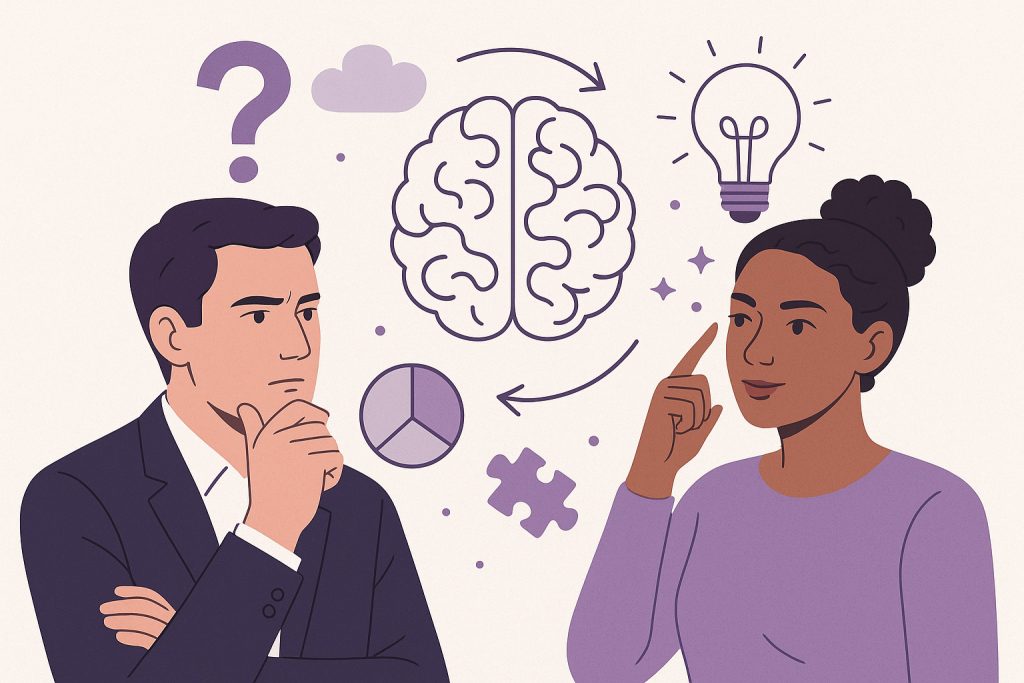
Top 5 Strategies for Solving Logical Puzzles: Techniques that Transform Challenges into Solutions
Diving into the fascinating world of logical puzzles can evoke a blend of excitement and intimidation. These puzzles offer more than just a mental challenge; they provide a playground for enhancing cognitive prowess and problem-solving skills. With the right strategies, even the most perplexing puzzles can be untangled, transforming potential frustration into rewarding triumphs. This article explores the top five techniques to tackle logic puzzles effectively, inviting you to become a master puzzle solver.
5. Visualization Techniques
The art of visualization stands as a crucial strategy in the realm of logical puzzles. By creating mental or physical representations of the problem, you bring intangible concepts to life. This method involves crafting diagrams, charts, and sketches to illuminate the puzzle’s structure. Visualization aids not just in understanding the puzzle, but also in memory retention and strategic insight.
- Flowcharts: By mapping out processes into sequential actions, flowcharts break down complex puzzles into manageable chunks, offering clarity in navigation through multifaceted problems.
- Venn Diagrams: These are particularly effective for puzzles involving intersections and unions of different elements, helping visualize relationships and commonalities.
- Sketches and Drawings: Simple illustrations can distill intricate details or concepts into easily digestible information, allowing clear visualization of scenarios that may otherwise seem abstract.
The connection between visual stimuli and cognitive processing cannot be overstated. Visualization invigorates your problem-solving capabilities, enabling you to perceive patterns and connections that could remain hidden within text alone.
4. Elimination Method
In a world filled with possibilities, the elimination method offers a beacon of clarity. This strategy is about systematically excluding options that fail to meet the given puzzle constraints, honing in on the correct solution. It proves indispensable in puzzles brimming with choices or conditions, guiding you away from dead ends.
Here’s a step-by-step approach to the elimination method:
- Identify all options: Begin by cataloguing every conceivable scenario or solution suggested by the puzzle.
- Assess feasibility: Examine each potential option against the constraints provided, acting as a filter for impracticalities.
- Cross off impossibilities: Through logical reasoning, dismiss options that clearly fall outside the puzzle’s boundaries, simplifying your path forward.
This method can save significant time and reduce confusion. As you narrow down the possibilities, the road to the solution becomes visible and more approachable, allowing concentrated effort on likely paths to success.
3. Pattern Recognition
At the heart of every logical puzzle lies a rhythm of patterns waiting to be discovered. Pattern recognition involves discerning these repetitions and sequences, a skill that can transform how you approach and solve puzzles. From Sudoku to complex logic grids, identifying patterns can unravel solutions seemingly hidden within chaos.
To perfect your pattern recognition abilities:
- Practice regularly: Frequent puzzle-solving attunes your mind to spot recurring patterns, honing a natural instinct for recognition.
- Analyze solved examples: Studying the trails others have blazed to solutions can reveal common patterns, broadening your strategic toolkit.
- Break down complex problems: Decomposition often simplifies puzzles, making underlying patterns more easily identifiable.
Developing this skill can deepen your understanding and appreciation of puzzles, transforming each into a chance for personal growth and analytical advancement.
2. Logical Deduction
Logical deduction serves as a cornerstone skill for puzzle solvers, fostering a systematic, evidence-based approach to finding solutions. This technique is rooted in making inferences from known truths, building conclusions incrementally. Logical deduction sharpens both puzzle-solving and general critical thinking abilities.
The process unfolds as follows:
- Establish known facts: Identify the indisputable truths within the puzzle’s framework.
- Build scenarios: Use these facts as a foundation to hypothesize about unknown elements and their potential interactions.
- Test your assumptions: Evaluate these hypotheses against the problem’s constraints, confirming those that withstand scrutiny and discarding those that do not.
This method not only streamlines puzzle-solving but also nurtures critical thinking and decision-making processes, skills valuable in numerous facets of life.
1. Adopt Multiple Perspectives
Leading our list is the technique of adopting multiple perspectives—a strategy that unleashes creativity and adaptability. By viewing puzzles through varied lenses, you expand the boundaries of conventional thought, often unveiling unconventional pathways to solutions.
To cultivate this approach:
- Brainstorm alternative approaches: Embrace diverse interpretations of the problem, encouraging lateral thinking and innovative resolutions.
- Challenge assumptions: Question the initial premises and perceived constraints, which can unlock novel insights.
- Engage in thought experiments: Mentally simulate different contexts or scenarios, testing how altering variables might lead to new answers.
By adopting this multidimensional thought process, you enrich your puzzle-solving arsenal, empowering yourself to tackle challenges with creativity and resilience.
In conclusion, mastering logical puzzles is an enriching pursuit that sharpens cognitive abilities and enhances problem-solving skills. Each technique discussed here—from visualization to multiple perspective adoption—offers unique avenues for engaging with puzzles, transforming them from formidable challenges into rewarding conquests. As you hone these skills, you may find that their benefits extend beyond puzzles, infiltrating various aspects of decision-making and analytical thinking in daily life.
| Category | Description |
|---|---|
| Critical Thinking | Engaging with logical puzzles enhances one’s ability to analyze arguments and identify flaws in reasoning. This skill is crucial in everyday decision-making. |
| Enhanced Problem-Solving Skills | Tackling various logical challenges promotes flexible thinking, enabling individuals to approach problems from multiple perspectives, often leading to innovative solutions. |
| Increased Patience and Persistence | Working through complex puzzles can foster a mindset of resilience. Learning to iterate through solutions without immediate success cultivates tenacity. |
| Social Skills Development | Participating in group puzzle-solving activities encourages collaboration and communication, thereby strengthening interpersonal relationships and teamwork. |
DISCOVER MORE: Click here to learn the key differences
Frequently Asked Questions on Strategies for Solving Logic Puzzles
What are the fundamental strategies for tackling logic puzzles?
The key strategies for solving logic puzzles include creating a step-by-step plan, analyzing the rules, breaking down the problem into smaller parts, and looking for patterns. It’s essential to approach each puzzle methodically, making sure to understand the objective and constraints before diving into solutions. Many experts recommend starting with what you know for sure and using those certainties to eliminate possibilities.
How can one effectively manage time when solving complex puzzles?
Time management in puzzle-solving is critical, especially in competitive settings. Prioritize the puzzles by difficulty and allocate time based on your familiarity with different types. It’s crucial to balance between solving difficult segments and identifying easy wins. Using a timer for practice can also improve efficiency and help maintain focus. For anyone looking to enhance their skills, exploring techniques like the Pólya method for problem-solving can offer new insights.
Do you need a mathematical background to solve logic puzzles effectively?
While having a mathematical background can be beneficial, it is not a prerequisite for solving logic puzzles. Most puzzles require critical thinking and logical reasoning more than specific mathematical skills. However, an understanding of basic math concepts can enhance your ability to recognize patterns and logical sequences. Many logic puzzles focus more on deduction and pattern identification than on calculations.
How can technology assist in solving logic puzzles?
Technology plays a significant role in solving logic puzzles by offering tools such as apps and software that simulate puzzles and provide hints or solutions. These digital tools can help visualize complex puzzles and offer step-by-step guides, enhancing the solver’s learning curve. Additionally, online platforms often feature challenging puzzles and community forums where tips and solutions are shared, fostering a collaborative environment for enthusiasts.
Are there specific techniques for improving logical thinking skills?
To enhance logical thinking skills, engage in regular practice with a variety of puzzle types and increase the complexity over time. Techniques such as mind mapping, practicing lateral thinking, and learning through examples from logic textbooks can significantly improve your skills. Engaging in activities that stimulate the brain, such as reading extensively and playing strategy games, also contributes to sharpening critical thinking capabilities.
DISCOVER MORE: Click here to enhance your preparation
Conclusion: Unlocking the Potential of Logical Puzzles
The exploration of strategies to solve logical puzzles unveils a repertoire of techniques that not only enhance problem-solving skills but also invigorate our cognitive faculties. We delved into some primary strategies that prove beneficial in associating challenges with creative solutions.
One significant takeaway is the importance of breaking down the problem into smaller, more manageable parts. This approach allows puzzle solvers to tackle each segment with clarity, reducing complexity and boosting confidence.
Furthermore, the article illustrates the power of pattern recognition. By identifying recurring sequences or structures within puzzles, individuals can efficiently anticipate possible outcomes and streamline their thought processes. This ability is crucial across various types of mind games, from Sudoku to complex riddles.
An additional strategy discussed is the method of hypothesis testing. Here, solvers are encouraged to experiment with different solutions, evaluating their plausibility and learning from each trial. This iterative approach not only offers a systematic path to the solution but also strengthens adaptive thinking skills.
Equipped with these techniques, the solver becomes adept at employing a logical framework to solve puzzles. This structured thinking not only enhances performance in recreational activities but can be transferred to other areas of life, promoting an analytical mindset in diverse situations.
In essence, mastering logical puzzles equips individuals with a toolkit of cognitive skills and strategies that enrich both strategic thinking and intellectual agility. As we continue to embrace these challenges, we not only derive enjoyment but also nurture our brainpower, keeping our minds sharp and engaged. The journey from challenge to solution transforms not only the puzzle but ourselves, encouraging us to explore further and delve deeper into the realm of logical problem-solving.