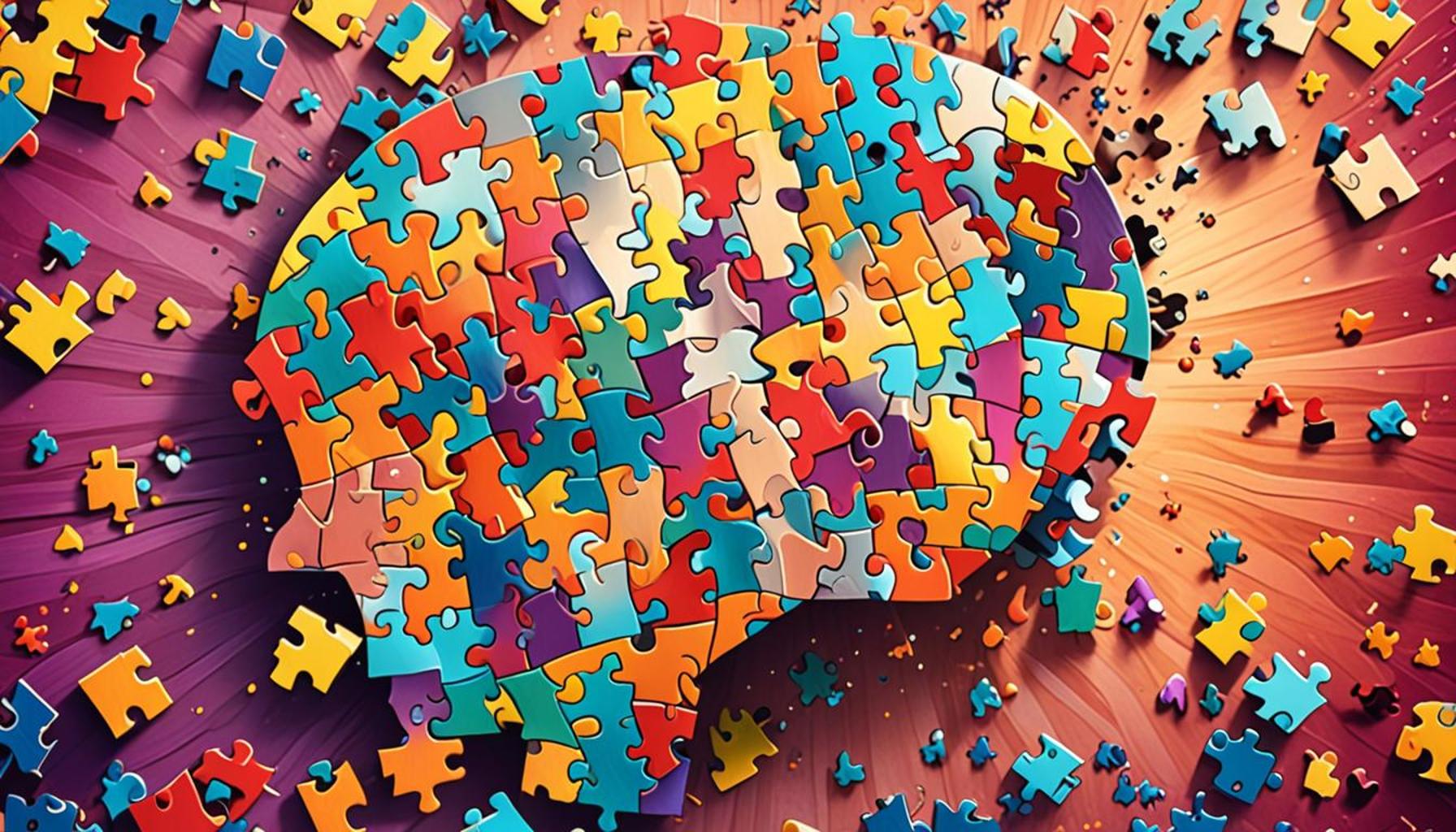
The Relationship Between Puzzle Complexity and Cognitive Load in Problem Solving

Understanding Puzzle Complexity and Cognitive Load
The ability to solve problems is fundamental to human cognition, profoundly influencing various aspects of daily life and learning. One fascinating area of study dives into how puzzle complexity influences cognitive load during problem-solving processes. This exploration reveals intricate patterns that can enhance or impede our capacity to think critically.
Exploring Key Concepts
At the heart of this relationship are two crucial concepts:
- Puzzle Complexity: Refers to the intricacy and challenge presented by a puzzle. This complexity can be determined by several factors, including the number of components involved, the rules that govern the puzzle, and the strategies available for solving it. For example, a simple jigsaw puzzle with only a few pieces presents a lower complexity level compared to a complex 1000-piece puzzle that may require identifying subtle color variations and patterns.
- Cognitive Load: Represents the mental effort required to process information. Cognitive load can be significantly affected by a variety of stimuli such as distractions in the surrounding environment, the complexity of the task at hand, and an individual’s prior knowledge and experience. For instance, a novice problem-solver will likely experience a higher cognitive load when tackling a complex puzzle than an experienced puzzle enthusiast.
Real-World Implications
Understanding how these elements interact can provide valuable insights, particularly in fields such as education, cognitive therapy, and even workplace efficiency. Educational settings often utilize puzzles and problem-solving activities to engage students, capitalizing on the understanding that:
- Higher puzzle complexity may lead to increased cognitive load, which can induce frustration and disengagement if the challenge exceeds a student’s capabilities.
- Conversely, appropriately challenging puzzles can enhance learning and retention. For example, educators may implement activities that start with simpler puzzles and gradually increase in complexity, allowing students to build confidence and competence.
Moreover, in cognitive therapy, therapists may use puzzles strategically to assess and enhance clients’ problem-solving skills and resilience. Engaging clients in puzzles that cater to their cognitive abilities could foster a greater sense of achievement and satisfaction, potentially leading to improved mental health outcomes.
This article aims to delve deeper into the various aspects of the relationship between puzzle complexity and cognitive load, uncovering fascinating findings that may reshape how we approach problem-solving in both personal and professional contexts. Understanding these dynamics not only enhances individual learning experiences but also supports various applications in technology, design, and mental well-being, paving the way for innovative solutions and strategies in problem-solving methodologies.
DISCOVER MORE: Click here to learn about the benefits of puzzles
The Impact of Puzzle Complexity on Cognitive Load
As we delve into the intricate relationship between puzzle complexity and cognitive load, it becomes evident that the difficulty of a puzzle has profound implications for our problem-solving capabilities. The way a puzzle is structured, including its rules and the number of variables involved, can significantly dictate the cognitive resources required to engage with it.
Puzzle Complexity and Its Dimensions
Puzzle complexity can be multifaceted, and understanding its dimensions helps to clarify why certain puzzles can either stimulate or overwhelm the cognitive capacities of individuals. The dimensions of puzzle complexity include:
- Number of Elements: Puzzles composed of a greater number of components, such as a Sudoku with numerous cells to fill, introduce more variables that the solver must consider simultaneously. This increased quantity heightens the cognitive burden, demanding more attention and memory resources.
- Rules and Restrictions: The complexity of rules governing a puzzle can vary greatly. Puzzles with simple, clear-cut rules are easier to approach, while those with intricate guidelines or multiple layers of constraints tend to exacerbate cognitive load. A puzzle like chess, with myriad possible moves, exemplifies this aspect.
- Strategies Required: Different puzzles require distinct solving strategies, which may involve mathematical reasoning, spatial awareness, or logical deduction. The need to adapt to various strategies can trigger cognitive overload, particularly for novices who may struggle to find the most effective approach.
Measuring Cognitive Load in Problem Solving
To understand the effects of puzzle complexity on cognitive load, researchers utilize various methods to gauge the mental effort involved in problem-solving tasks. These include:
- Self-Report Measures: Participants may be asked to rate their perceived cognitive load during puzzle-solving tasks, providing subjective data about their experiences.
- Physiological Measures: Techniques such as eye-tracking and neuroimaging can provide objective insights into cognitive load by examining eye movement patterns or brain activity.
- Task Performance: By measuring completion times, accuracy, and error rates during puzzle tasks of varying complexity, researchers can infer the relationship between puzzle difficulty and cognitive load.
Studies have shown that when puzzles reach a level of complexity that exceeds an individual’s cognitive load capacity, performance typically declines. This decline can manifest as increased errors, longer completion times, and ultimately, a decrease in satisfaction or engagement with the task. Conversely, puzzles that align with an individual’s skill level can promote a productive state of flow, whereby the individual remains captivated and motivated.
As we investigate further, it becomes crucial to recognize how this relationship has practical implications for settings like education and technology. Understanding how to balance puzzle complexity with cognitive load can not only enhance learning but also improve design strategies in gaming and interactive environments. The journey to deciphering this complex relationship may open new avenues for optimizing our problem-solving capabilities, leading to more effective approaches in various domains.
The Dynamics of Cognitive Load and Puzzle Complexity
The interplay between puzzle complexity and cognitive load is a fascinating area of research within psychology and problem-solving disciplines. Cognitive load refers to the amount of mental effort used in working memory, and it can greatly impact an individual’s ability to solve problems effectively. When puzzles increase in complexity, the demands on cognitive load also rise, creating a nuanced relationship that is crucial in understanding how we tackle challenges.
Research indicates that higher complexity in puzzles often leads to heightened cognitive load, which can be both beneficial and detrimental. On one hand, complex puzzles can stimulate critical thinking and creativity, providing opportunities for deeper learning and engagement. On the other hand, excessive cognitive load can lead to decreased performance, where individuals may become overwhelmed and unable to effectively process information or arrive at solutions.
Moreover, the intrinsic cognitive load of a puzzle—its inherent difficulty—can vary widely based on an individual’s prior knowledge and experience. A puzzle that offers a challenge to one person may be effortless for another, highlighting the subjective nature of cognitive load. Backed by empirical studies, experts emphasize tailoring puzzles to appropriate difficulty levels, as this balance fosters not only enjoyment but also greater intellectual growth.
In essence, understanding how cognitive load interacts with puzzle complexity is essential for enhancing skills in problem solving, innovation, and creativity. By navigating this relationship, educators and researchers can design activities that maximize learning outcomes while keeping cognitive strain at a manageable level.
| Category | Impact |
|---|---|
| Puzzle Complexity | Increases cognitive demand, potentially enhancing problem-solving skills. |
| Cognitive Load | Can lead to either improved understanding or hindered performance based on the challenge level. |
DIVE DEEPER: Click here to uncover the mysteries
Cognitive Load Theory in Puzzle Solving
To better comprehend how puzzle complexity influences cognitive load, we must refer to Cognitive Load Theory (CLT), which posits that our cognitive resources are finite. The theory distinguishes between three types of cognitive load: intrinsic, extraneous, and germane. Understanding these categories provides insights into how puzzle complexity affects problem-solving efficacy.
Types of Cognitive Load
- Intrinsic Load: This type of load is inherent to the puzzle itself and is a function of its complexity. For example, a multi-layered crossword with interlocking clues presents a higher intrinsic load compared to a straightforward one-line riddle. As puzzle complexity increases, intrinsic load tends to rise, challenging the solver’s cognitive capacities, especially if they lack prior knowledge or experience in the area.
- Extraneous Load: Extraneous load arises from distractions or poorly designed instructions that complicate the problem-solving process. In puzzles, this could be illustrated by unclear guidelines or excessive visual clutter. When such extraneous factors are present alongside a complex puzzle, they can significantly overwhelm cognitive resources, reducing a solver’s efficiency and enjoyment.
- Germane Load: This component refers to the mental effort dedicated to processing information and developing solutions. A well-designed puzzle with appropriate complexity can encourage a productive germane load, enhancing learning and problem-solving skills. For example, logic puzzles that challenge reasoning without becoming excessively complicated will enable solvers to engage their cognitive faculties effectively.
Interactive Environments and Cognitive Load
The implications of puzzle complexity and cognitive load extend beyond traditional problem-solving scenarios into digital and interactive environments. Video games and educational apps often use puzzle mechanics to create engaging experiences. Developers must strike a balance to ensure that players experience optimal cognitive load. For instance, a mobile app designed for learning mathematics may vary puzzle difficulty based on user performance, allowing learners to thrive within their cognitive limits while gradually introducing more complex challenges.
Furthermore, the use of adaptive learning technologies showcases how algorithms can adjust puzzle complexity in real-time, catering to individual user needs. Such innovations promote sustained engagement and effective learning by ensuring that cognitive load remains within manageable parameters. Studies indicate that regions of the brain associated with problem-solving are more active when users face appropriately challenging puzzles, enhancing memory retention and understanding.
Real-World Applications and Further Research
Beyond gaming and education, understanding the relationship between puzzle complexity and cognitive load can influence various fields, including occupational training and therapeutic practices. Employees in demanding professions, like healthcare, benefit from simulation-based training that incorporates complex problem-solving scenarios. Evidence suggests that when trainees encounter situations similar to real-world challenges, they are better prepared for their roles, provided the complexity aligns with their abilities.
Additionally, therapeutic approaches that include puzzles and cognitive challenges have emerged in mental health treatments. Engaging individuals in appropriate puzzles stimulates cognitive processes that can enhance problem-solving abilities and overall mental well-being. The key lies in providing challenges that are stimulating but not overwhelming, a delicate balance informed by ongoing research in cognitive psychology.
As we continue to unravel this intricate relationship, it opens doors for further studies in cognitive science, paving the way for advancements in both educational methodologies and practical applications in various fields. By optimizing puzzle design with cognitive load considerations, we can transform how individuals engage with problem-solving tasks, ultimately enhancing skill development and mental agility.
DON’T MISS: Click here to enhance your strategy skills
Conclusion
In summarizing the intricate interplay of puzzle complexity and cognitive load, it is evident that a nuanced understanding of these elements can greatly impact problem-solving efficacy across various domains. By analyzing how intrinsic, extraneous, and germane loads function within challenging puzzles, we can appreciate the importance of crafting experiences that are both stimulating and manageable for the solver. Properly calibrated complexity fosters engagement while enhancing cognitive capacities, promoting deeper learning and skill development.
The integration of adaptive technologies, particularly in educational settings and interactive environments, serves to illustrate the significance of personalized puzzle experiences. As demonstrated, adjustments made to puzzle difficulty in real-time not only cater to individual cognitive thresholds but also facilitate a more engaging and productive learning process. Furthermore, the applications extend into occupational training and therapeutic contexts, where carefully designed challenges can improve problem-solving abilities and mental well-being.
As future research continues to explore the relationship between cognitive load and puzzle complexity, new methodologies and insights will likely emerge that can further refine our understanding. This ongoing inquiry offers fascinating possibilities for enhancing how we learn, work, and solve problems in an increasingly complex world. Ultimately, the journey of unraveling this relationship encourages not only greater efficiency in problem-solving but also a more profound appreciation for the mental gymnastics involved in navigating puzzles, a reflection of our cognitive prowess.