The influence of logical reasoning games on the development of cognitive skills in children

The Role of Logical Reasoning Games in Child Development
The landscape of childhood development is rapidly changing in our digital age. As educational philosophies shift, the spotlight is increasingly placed on logical reasoning games as integral to nurturing cognitive skills in children. These games serve not merely as a source of entertainment; they are powerful tools that engage young minds in unique and stimulating ways that traditional education may not fully address.
So, what sets logical reasoning games apart in their effectiveness? A closer examination reveals several key attributes that contribute to their success in developing crucial skills:
- Problem-Solving Skills: Through engaging scenarios, children learn to dissect problems into manageable components. For example, a puzzle game may present a scenario where players must navigate a maze, requiring them to plan their paths and consider various routes before reaching the solution.
- Critical Thinking: Many of these games require players to analyze information critically. In a game like “Simon Says,” children must remember specific commands while making swift decisions based on logical sequencing and memory retention.
- Creativity: Logical reasoning games often encourage outside-the-box thinking. Games that involve building structures, like “Minecraft,” allow children to experiment with designs and concepts, promoting ingenuity alongside logic.
Research supports the notion that children who engage regularly with logic-based games exhibit remarkable improvements across several cognitive domains. Studies have shown that such interactions lead to enhanced memory retention, where children can recall facts and figures with better accuracy. Additionally, they tend to make decisions more swiftly, reflecting an improved ability to process information efficiently.
Moreover, increased attention spans are also noted. Many logical reasoning games require sustained concentration, pushing children to focus on tasks for prolonged periods, which is increasingly vital in our distraction-laden environment.
With the diverse array of digital platforms available today—ranging from educational websites to immersive mobile applications—incorporating logical reasoning games into a child’s daily routine has never been easier or more appealing. Parents can explore options like “Rush Hour,” a board game that demands critical thinking and spatial reasoning, or online platforms such as “Prodigy Math,” which adapts to each child’s skill level, keeping them engaged and challenged.
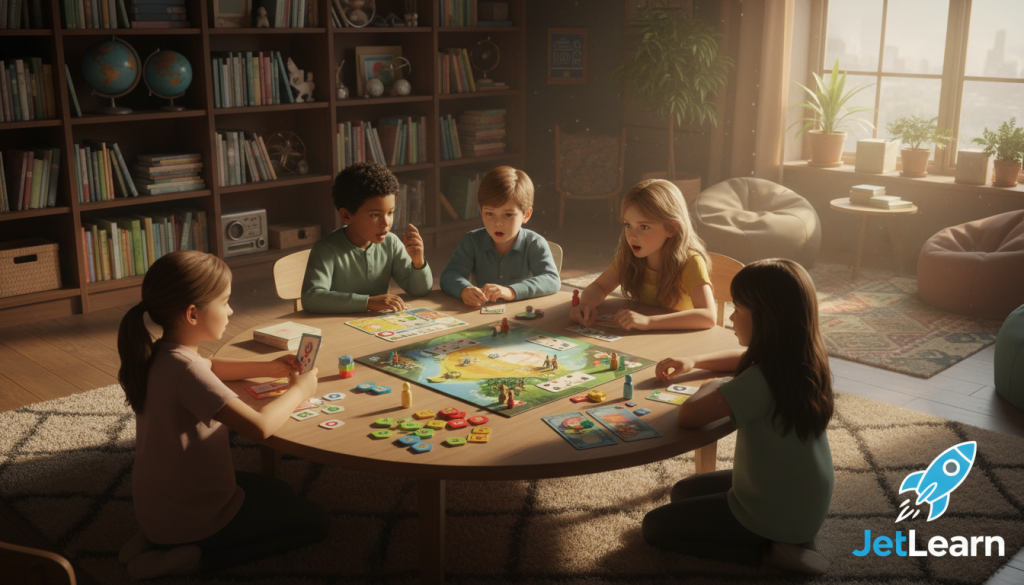
As more parents and educators gain awareness of the benefits offered by logical reasoning games, they are becoming fundamental components of contemporary educational approaches. In a world where problem-solving and critical thinking are paramount, these games are shaping future-ready learners who are not only equipped to tackle academic challenges but also to navigate the complexities of life.
DIVE DEEPER: Click here to uncover more insights
Unlocking Cognitive Potential Through Play
The influence of logical reasoning games on children’s cognitive skills extends far beyond mere enjoyment. These games cultivate a robust set of skills that are crucial for academic success and everyday problem-solving. Understanding how these games impact development begins with recognizing the fundamental cognitive skills they enhance.
Recent studies show a clear link between engaging in logical reasoning activities and the strengthening of important cognitive functions. Here are some of the most significant cognitive skills that logical reasoning games help develop:
- Memory Enhancement: Logical games often require recalling multiple rules or steps, which can lead to improved short-term and long-term memory in children. Games like “Memory Match” encourage players to remember card positions, which exercises and sharpens memory skills.
- Analytical Skills: These games teach children to break down complex problems into smaller, more manageable parts. By analyzing various outcomes and their consequences, children learn to think systematically and evaluate the best options.
- Time Management: Many logical reasoning games introduce time constraints that challenge children to think quickly and prioritize tasks. This skill is particularly beneficial in a world demanding continual multitasking.
Moreover, logical reasoning games foster social interaction, a critical component of cognitive development. Many of these games can be played in groups, promoting teamwork and communication skills. Children learn to articulate their thought processes, justify their decisions, and listen to others, thereby enhancing their collaborative capabilities.
Interestingly, the application of logical reasoning games is not restricted to traditional board games or card games. The integration of technology has provided virtual platforms where children can engage in logical reasoning in innovative ways. Applications like “Thinkrolls” combine logic puzzles with physics principles, allowing children to experiment with cause and effect in an interactive and hands-on manner. This modern approach not only makes learning enjoyable but also aligns with children’s natural inclination towards technology.
Another appealing aspect of these games is their adaptability to various age groups and skill levels. Whether a child is a beginner or advanced in problem-solving, logical reasoning games can be tailored to their cognitive abilities. This individualized approach ensures sustained engagement and reduces the likelihood of frustration, thus making the learning process enjoyable and effective.
As we delve deeper into the psychological theories behind cognitive development, it becomes evident that the benefits reaped from logical reasoning games are not limited to the present. They lay a foundation for lifelong learning and adaptability—skills that are essential as children grow into adults facing increasingly complex challenges.
In conclusion, the enthusiasm surrounding logical reasoning games is justified. They serve as catalysts for cognitive enhancement, equipping children with vital skills that extend beyond the realm of academics and into the fabric of everyday life. As more educational systems and parents embrace such tools, the future promises to be bright for the next generation of thinkers and problem solvers.
The Influence of Logical Reasoning Games on Children’s Cognitive Skills
Logical reasoning games offer a fascinating glimpse into the ways children can enhance their cognitive skills through interactive play. These games encourage analytical thinking, problem-solving abilities, and creativity, vital attributes in a rapidly evolving world. As children engage in such activities, they unknowingly sharpen their capacity to process information, leading to significant cognitive advancements.
Research supports the idea that regular participation in logical games can enhance memory retention and improve spatial reasoning. For instance, games like chess or Sudoku require players to think several moves ahead, fostering a strategic mindset. This early development of foresight and adaptability can translate into better decision-making skills that children carry into adulthood.
Moreover, logical reasoning games often involve teamwork, encouraging social development alongside cognitive growth. As children collaborate on puzzles or strategy games, they work on communication skills, learning to articulate their thoughts and listen to others. This dual benefit of cognitive and social skill enhancement makes logical reasoning games not only fun but also instrumental in a child’s overall development.
The presence of these games in educational settings is becoming increasingly popular, with educators recognizing their role in fostering a love for learning. Schools integrating logical reasoning activities into their curricula find that students exhibit heightened engagement and participation. In the long run, such integration assists in building a robust foundation for future academic success.
| Category 1 | Category 2 |
|---|---|
| Critical Thinking | Enhances ability to evaluate information and make reasoned judgments. |
| Problem Solving | Cultivates innovative thinking and adaptability when faced with challenges. |
Overall, the engagement of children in logical reasoning games serves as a pivotal factor in cultivating essential cognitive skills. As these young minds navigate the challenges of these games, they develop capabilities that are critical for their academic journey and personal growth. This intersection of learning and play is an area ripe for exploration and discussion.
DISCOVER MORE: Click here to enhance your memory skills!
Engaging the Mind: The Long-Term Impact of Logical Reasoning Games
Beyond immediate cognitive enhancements, the influence of logical reasoning games on children’s cognitive skills fosters profound long-term development. Engaging in these games not only shapes analytical abilities but also helps children to develop a growth mindset—an essential trait that fuels resilience and adaptability in the face of challenges.
Research conducted by the National Institute for Play suggests that children who regularly participate in logical reasoning puzzles and games exhibit greater problem-solving abilities as they age. This performance leap isn’t merely a reflection of improved game skills; it correlates with enhanced brain plasticity, which is crucial for cognitive flexibility. As children navigate through various game scenarios, they are often required to pivot their strategies or reconsider their approaches, embedding flexibility in their thought processes.
An intriguing aspect of logical reasoning games is their potential to enhance emotional intelligence (EQ) alongside cognitive intelligence (IQ). When children engage with their peers in competitive gameplay, they are exposed to various social dynamics. These scenarios encourage players to manage emotions, cope with wins and losses gracefully, and appreciate different perspectives. The gameplay experience can significantly aid in developing empathy, as children often need to consider their opponents’ strategies and emotional reactions during the game.
Moreover, logical reasoning games can serve as modern educational tools that reinforce lesson plans in diverse subjects. For instance, a game that requires strategic thinking can complement a mathematics lesson by allowing children to explore abstract concepts through practical application. Educators can leverage these games to create interactive learning environments, assisting children in translating theoretical knowledge into actionable insights. Data from educational psychologists indicates that game-based learning increases retention rates, making it a compelling method for academic instruction.
The versatility of logical reasoning games further allows parents to integrate play into daily routines seamlessly. From traditional board games like “Chess” and “Checkers” to innovative online platforms, parents can employ strategic games during family nights or road trips. Games such as “Rush Hour,” where players utilize logic to navigate a car through a traffic grid, not only provide entertainment but can also promote teamwork and critical thinking in a family setting.
As digital learning platforms continue to rise, the influence of logical reasoning games adapts to incorporate cutting-edge technologies. Virtual reality (VR) gaming experiences are entering the scene, presenting children with immersive environments where they solve puzzles in fantastical settings. Such advancements attract the interest of tech-savvy youth, combining their passion for technology with cognitive development. This approach ensures that learning remains relevant and exciting in a rapidly evolving educational landscape.
The incorporation of logical reasoning games aligns closely with essential skills identified by educators as vital for success in the 21st century. Skills like creativity, collaboration, and critical thinking become ingrained through consistent practice in challenging gameplay environments. By stimulating cognitive functions and reinforcing these skills, logical reasoning games position children not only to excel academically but also to adapt and thrive in diverse life situations.
As discussions around educational strategies grow, logical reasoning games emerge as powerful tools primed to shape capable, adaptable, and resilient future generations. The myriad benefits extend well beyond fun and games; they prepare children to tackle the challenges of tomorrow with confidence and creativity.
DISCOVER MORE: Click here to dive deeper
Unlocking Potential: The Lasting Benefits of Logical Reasoning Games
In conclusion, the influence of logical reasoning games on the development of cognitive skills in children is both significant and multifaceted. These engaging activities not only enhance problem-solving abilities and encourage analytical thinking but also foster essential social-emotional skills such as empathy and resilience. As children navigate the complexities of these games, they develop a robust growth mindset, equipping them with the adaptable strategies needed to face life’s myriad challenges.
Moreover, the seamless integration of logical reasoning games into educational contexts further amplifies their impact. By incorporating these games into lesson plans, educators can create dynamic learning environments that promote critical thinking and creativity while making abstract concepts more tangible. The positive correlation between game-based learning and higher retention rates underscores the value of this approach, creating opportunities for children to connect theoretical knowledge with real-world application.
As technology continues to evolve, embracing innovative formats, including virtual reality, offers even greater promise for enhancing cognitive development. This adaptability reflects the ongoing commitment to keeping learning relevant and engaging for today’s tech-savvy youth. Ultimately, the benefits of logical reasoning games extend far beyond the classroom, enabling children to cultivate skills that are vital in the 21st century.
In a world that increasingly prioritizes collaboration, creativity, and critical thinking, logical reasoning games stand out as essential tools that prepare children not just for academic success, but also for a future filled with possibilities. By encouraging playfulness in learning, we empower our children to not only confront challenges but also to unlock their full potential as confident, resourceful individuals.