Boost Memory Focus How Puzzles Enhance Adult Cognitive Skills
Unlocking Cognitive Potential
In a world brimming with distractions, maintaining a sharp mind can be quite a challenge. A fascinating method to enhance both memory and concentration lies in the realm of puzzles and mental challenges. These engaging activities not only entertain but also serve as powerful tools to boost cognitive skills in adults. Puzzles can range from traditional crosswords to modern brain-training apps, each offering unique benefits to the mind.
The Importance of Mind Games
As individuals age, it becomes increasingly crucial to find ways to keep the brain actively engaged. Mind games and puzzles are beneficial for several reasons. Firstly, they stimulate neural connections, helping to maintain and strengthen the pathways within our brains. This is essential in preventing cognitive decline, often associated with aging.
Moreover, these activities improve problem-solving skills, providing a mental workout that challenges the brain to think critically and strategically. For example, solving Sudoku requires logical reasoning and analytical skills, essential for adeptly navigating everyday challenges.
Additionally, mind games offer a fun way to reduce stress. Engaging in a challenging puzzle can absorb the mind and provide a sense of accomplishment and relaxation upon completion.
This article will delve into how puzzles can be a transformative experience for enhancing cognitive function. Prepare to discover the Top 5 puzzles that can significantly improve your mental prowess. Whether you’re a puzzle enthusiast or just starting, unlocking your cognitive potential is just a piece away.
DISCOVER MORE: Click here to enhance your strategy skills
Top 5 Ways Puzzles and Mental Challenges Can Enhance Memory and Concentration in Adults
In today’s fast-paced society, the capacity for concentration and memory retention is increasingly invaluable. Adults often find themselves in the balancing act of juggling careers, personal lives, and a seemingly endless stream of information. Distractions are aplenty, and the ability to focus can sometimes feel beyond reach. However, puzzles and mental challenges present a unique and effective solution, unlocking enhanced cognitive function. Here, we explore the top five methods through which these engaging activities boost memory and concentration in adults.
5. Boosting Problem-Solving Skills
Puzzles are not just assortments of pieces meant for idle amusement. They serve as demanding exercises for the mind that call for skilled problem-solving. Whether it’s unraveling the complexities of a Sudoku or decoding a challenging crossword, adults are encouraged to activate their critical and analytical thinking skills.
Engaging in these cerebral activities stimulates the brain, fostering new neural connections. This is not merely an exercise in vanity but a practical tool for various real-world scenarios. For instance, learning to prioritize tasks more effectively can transform a chaotic workday into a structured and manageable sequence. Similarly, finding creative solutions to challenging work situations becomes less daunting when one’s problem-solving toolkit is well-developed. Improved decision-making processes, another by-product of regular puzzle engagement, can also lead to improved efficiency and effectiveness in both personal and professional spheres.
4. Promoting Neuroplasticity
Neuroplasticity refers to the brain’s remarkable ability to reorganize itself, forming new neural connections throughout life. This attribute is pivotal for adaptability and learning. Engaging in puzzles and mental challenges demands that the brain confronts new obstacles, thus promoting this dynamic capability.
Regularly exercising the mind with puzzles and challenges leads to improved abilities to learn new skills, faster recovery from cognitive decline associated with aging, and enhanced flexibility in thinking patterns. For example, someone engaged with chess regularly is not just playing a game; they are continuously training their brain to imagine various scenarios and adapt to unexpected challenges, allowing their mind to be more resilient.
The mental agility gained through puzzles is not confined to their completion; it spills over into real life, ensuring that memory and concentration are nurtured consistently. This adaptability is especially crucial in a world where change is the only constant.
3. Enhancing Memory Retention
Memory retention plays a critical role in effective concentration. Puzzles and mental challenges stimulate multiple parts of the brain responsible for memory, making them an enjoyable avenue to enhance cognitive capabilities. Research indicates that puzzles focused on memory can notably strengthen short-term memory, help retain important information longer, and improve the capacity to recall learned knowledge.
Repeatedly challenging our memory through activities like memory card games or logic puzzles reinforces synaptic connections. This scientific process aids in firmly grounding information, which can prove invaluable during complex tasks, such as preparing for a presentation or learning a new language.
Consider a study where adults who regularly engaged in memory games exhibited improved recall abilities compared to their non-puzzle-solving counterparts. This direct correlation between puzzles and memory prowess highlights their significance in enhancing cognitive power.
2. Reducing Anxiety and Enhancing Focus
Anxiety and stress are formidable adversaries of concentration. Fortunately, puzzles offer a soothing balm. By immersing oneself in a singular task, mental challenges can effectively shift focus from stressors, promoting a serene and concentrated state of mind. This requirement for undivided attention serves a dual purpose: it simultaneously hones focus and acts as a form of meditation, encouraging mindfulness and emotional regulation.
Regular engagement in puzzles can therefore decrease feelings of being overwhelmed, bolster mindfulness through focused activity, and ultimately lead to improved emotional well-being.
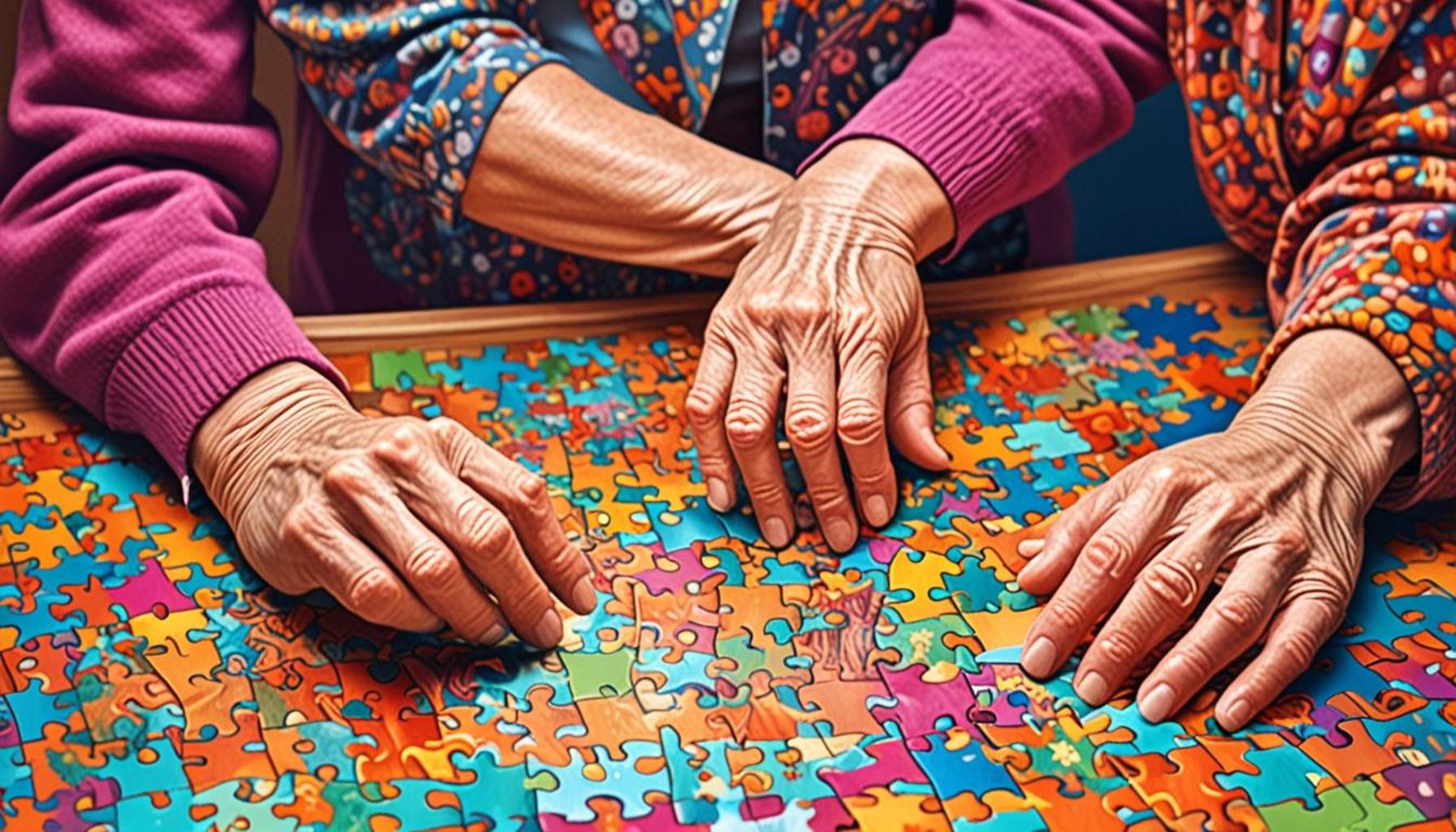
In a recent experiment, participants who regularly engaged in jigsaw puzzles reported significantly reduced stress levels compared to those who didn’t. The act of piecing together small parts into a coherent whole promoted a sense of calm and satisfaction, underlying the therapeutic benefits of puzzles.
1. Maintaining Cognitive Health
The most profound benefit of indulging in puzzles and mental challenges lies in their impact on long-term cognitive health. A body of research suggests that engaging in consistent cognitive activities can slow the progression of cognitive decline. Notable gains include a decreased risk of developing Alzheimer’s or dementia, promotion of healthy aging, and the ability to pursue lifelong learning.
Maintaining the habit of engaging with puzzles throughout adulthood can ensure that memory and concentration remain sharp. For instance, older adults who consistently worked on complex puzzles often showed higher cognitive function levels compared to those who did not engage similarly.
This pursuit isn’t just an investment in one’s current mental health but a step toward future cognitive vitality. As the population ages, prioritizing activities that support cognitive health is necessary to foster a vibrant, mentally stimulating life well into the golden years.
In conclusion, the role of puzzles and mental challenges goes beyond mere pastime; they significantly enhance memory and concentration in adults. From boosting problem-solving prowess to promoting cognitive well-being, the multifaceted benefits warrant exploration. Embracing such mental activities offers both immediate enjoyment and long-term cognitive rewards.
| Category | Description |
|---|---|
| Cognitive Engagement | Engaging in puzzles and mental challenges demands a high level of cognitive effort, prompting individuals to think critically and solve problems. |
| Memory Enhancement | Studies indicate that regular participation in puzzles can significantly improve memory retention, as the brain forms new neural connections during problem-solving. |
| Stress Reduction | Engaging in mental challenges not only boosts concentration but also acts as a form of meditation, helping to alleviate stress and improve overall well-being. |
| Social Interaction | Participating in group puzzle-solving sessions encourages socialization and collaboration, which can further enhance cognitive skills through shared knowledge and experiences. |
Engaging with puzzles and mental challenges offers numerous benefits that go beyond mere entertainment. These activities provide vital exercise for the brain, fostering connections that can lead to enhanced memory and increased concentration. As one delves into different types of puzzles, ranging from crosswords to Sudoku, various aspects of cognitive function are put to the test. Research has shown that **cognitive engagement** during these activities can lead to sharper thought processes. The brain, much like a muscle, requires regular training to maintain its strength and flexibility. This continual stimulation is crucial in fighting off cognitive decline that can accompany aging.Furthermore, the link between **memory enhancement** and brain exercises has garnered attention in scientific studies. By consistently engaging in tasks that require memory retrieval, individuals can strengthen their ability to remember and recall information, leading to marked improvements in daily life.Another important aspect is the effect of **stress reduction** through these cognitive endeavors. As participants immerse themselves in puzzle-solving, they often find themselves in a state of flow, where distractions are minimized, and concentration is maximized. This cognitive focus not only enhances mental acuity but also provides an escape from the everyday stresses of life.Moreover, puzzles can also serve as a remarkable avenue for **social interaction**. Collaborating with friends or family members to tackle a tricky puzzle can transform the experience from solitary to communal. Through discussion and shared strategies, participants not only bond but also learn from each other’s thought processes, further benefiting their cognitive growth.In summary, the interplay between puzzles, mental challenges, memory enhancement, and concentration is intricate and increasingly relevant to adult life. Continually engaging in these practices warrants attention for anyone looking to sharpen their mental faculties and embrace a healthier mind.
DISCOVER: Click here to learn how
Frequently Asked Questions about Puzzles and Mental Challenges for Adults
How do puzzles help improve memory in adults?
Puzzles, such as crosswords and Sudoku, stimulate the brain by engaging various cognitive functions, including memory recall. When working on puzzles, individuals must remember shapes, strategies, and even numbers, which exercises the brain’s memory center. Regular puzzle-solving can help strengthen neural connections, potentially leading to an improvement in overall memory retention. Studies have shown that engaging in cognitive activities can effectively slow down age-related memory decline.
Can mental challenges enhance concentration levels?
Yes, mental challenges can significantly boost concentration. As adults tackle complex problems, their brains are trained to focus on a single task, reducing susceptibility to distractions. This sustained attention not only aids in completing the puzzle but also translates to better concentration in everyday activities. Practices like this enhance the brain’s ability to filter out peripheral noise, keeping the mind sharp and focused.
Are there particular types of puzzles that are more effective for cognitive improvement?
While any puzzle can be beneficial, certain types are particularly effective for cognitive enhancement. Logic puzzles, such as Sudoku and riddles, enhance problem-solving skills, while word puzzles, like crosswords, improve vocabulary and language processing. 3D puzzles, on the other hand, can boost spatial reasoning. Mixing different types of puzzles can provide a comprehensive brain workout, engaging different areas of the brain for holistic cognitive benefits.
Is it better to solve puzzles individually or in group settings?
Both individual and group puzzle-solving offer distinct cognitive benefits. Solving puzzles alone allows for introspection, deep focus, and independent cognitive exercise, enhancing self-reliance and decision-making skills. Group puzzles, however, encourage communication, teamwork, and the exchange of ideas, which can lead to improved social cognition and problem-solving prowess. Engaging in both scenarios can offer a balanced and enriched cognitive experience.
How often should adults engage with puzzles to notice improvement?
There is no one-size-fits-all answer, as the impact of puzzles varies based on individual differences in cognition and lifestyle. However, regular engagement—such as setting aside time for puzzle-solving several times a week—can lead to noticeable improvements in mental agility over time. Consistency is key in brain training; thus, incorporating puzzles into one’s routine, whether daily or a few times a week, can foster long-term cognitive health.
DIVE DEEPER: Click here to uncover the educational benefits
Conclusion: The Power of Puzzles and Mind Challenges
Puzzles and mental challenges have emerged as potent tools in enhancing both memory and concentration in adults. Throughout this article, we explored various studies and expert opinions highlighting the substantial cognitive benefits these activities offer. Engaging in puzzles like crosswords, Sudoku, and jigsaw puzzles, and participating in strategic games such as chess or Go, are more than just entertaining pastimes. They serve as exercises for the brain, increasing its capacity to store and recall information while improving mental focus.
One of the critical takeaways is the proven enhancement of neuroplasticity. Puzzles encourage connections between brain cells, which helps in mitigating age-related memory decline and boosts cognitive capabilities. Furthermore, these activities demand a high level of concentration, teaching individuals to focus deeply, which can translate into better performance in daily tasks and professional responsibilities.
In addition, the mental agility derived from solving puzzles can lead to improved problem-solving skills and increased patience. The collective impact of these benefits makes puzzles and mind challenges an invaluable addition to any adult’s daily routine.
Moreover, the social component of many puzzle activities can foster a sense of community and shared endeavors, further augmenting their beneficial effects. As we continue to explore the human brain’s potential, incorporating mental challenges into our lives might just be the key to maintaining cognitive vitality well into later years. Ultimately, these activities not only entertain but also empower, offering a practical, engaging way to reinforce our mental faculties.
As we have seen, the integration of puzzles and mind games into daily life is not merely a leisure choice but a strategic move toward improving brain health. We stand on the brink of numerous possibilities, with each puzzle solved only deepening our understanding of the complex workings of the human mind.